Future-Proofing Human Potential: Why Resilience and Adaptability Are the Most Valuable Skills of the Next Decade
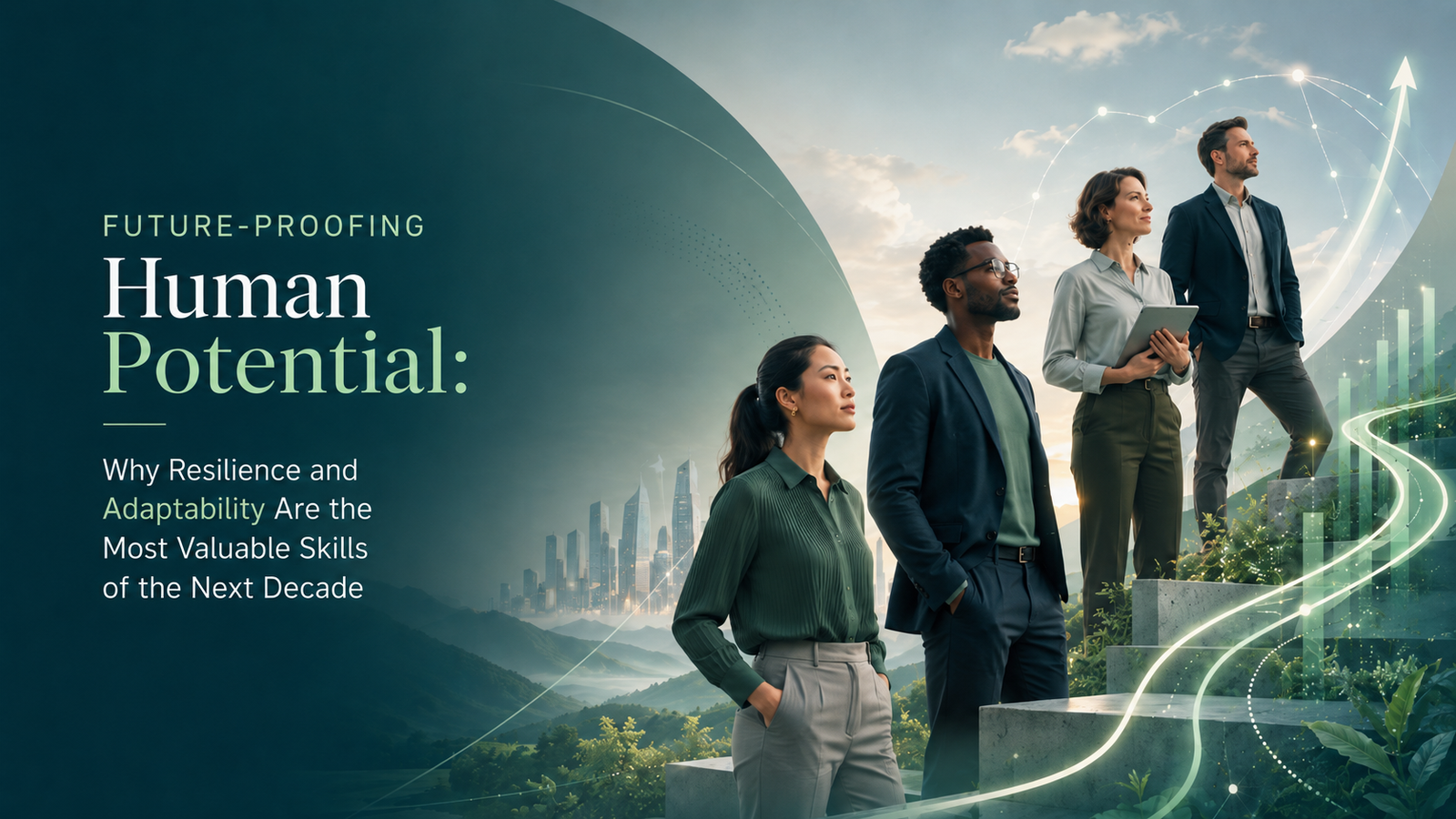
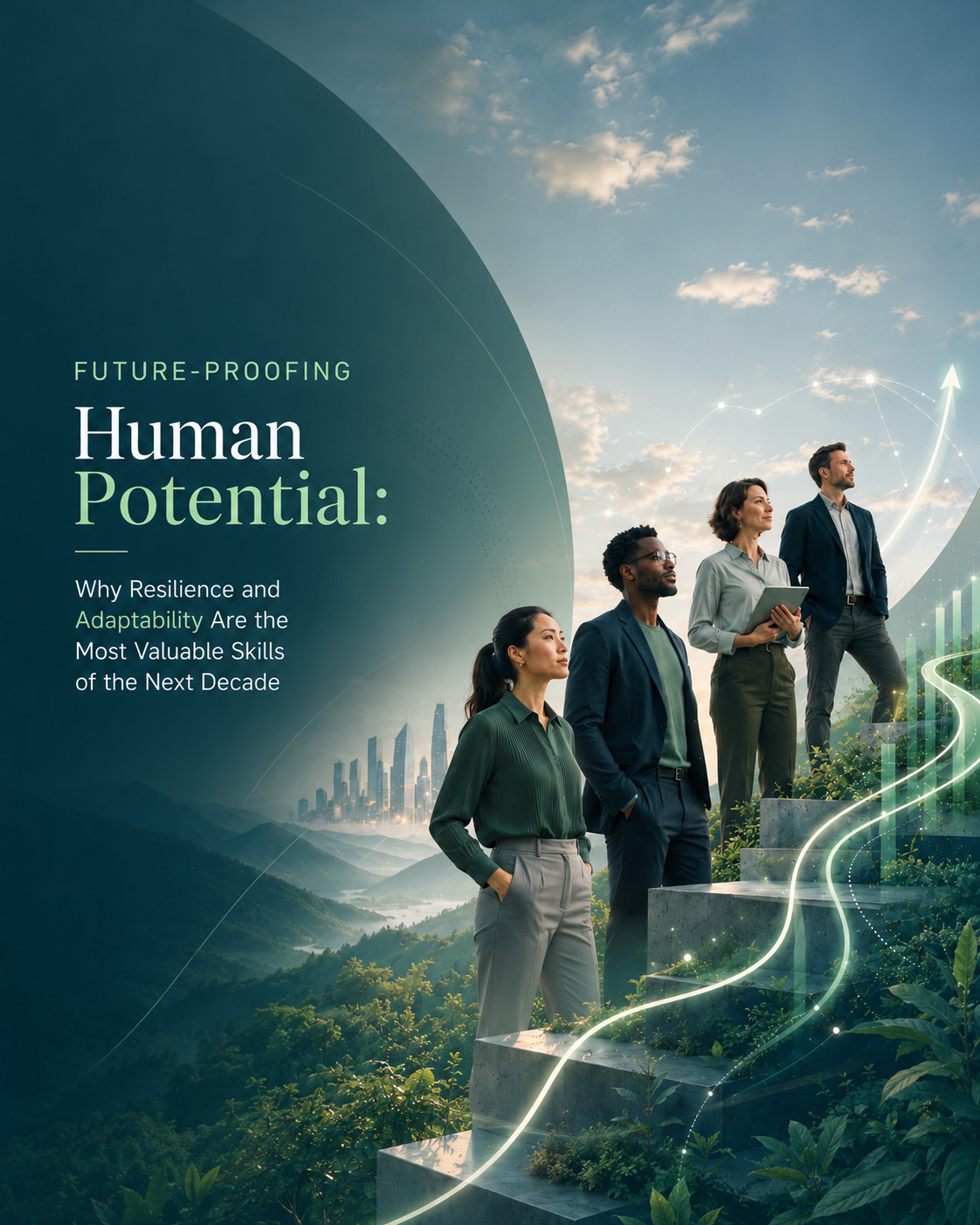
The next decade will not be defined only by technology, automation, or artificial intelligence. It will also be shaped by the human ability to respond, adjust, learn, and grow through change.
As industries evolve faster than ever, organizations are realizing that technical skills alone are not enough. Tools will change. Systems will be upgraded. Business models will be disrupted. But the people who can adapt, recover, and continue performing under uncertainty will become the most valuable asset in any organization.
This is where resilience and adaptability become more than soft skills. They become strategic capabilities.
The Future Will Reward Human Flexibility
The workplace is entering an era where change is no longer occasional. It is continuous.
New technologies, shifting customer expectations, economic uncertainty, changing workforce models, and global competition are all reshaping how organizations operate. In this environment, success will not belong only to those who know the most today. It will belong to those who can learn, unlearn, and relearn quickly.
Adaptability allows people to adjust their mindset, behavior, and approach when circumstances change. It helps teams stay effective when plans shift, roles evolve, or new tools are introduced.
Resilience, on the other hand, allows people to keep moving forward despite pressure, setbacks, or ambiguity. It gives individuals and teams the capacity to recover, refocus, and continue contributing.
Together, these two skills form the foundation of future-ready performance.
Why Resilience Matters More Than Ever
Resilience is often misunderstood as simply “being strong.” In reality, resilience is not about avoiding stress or pretending that challenges do not exist. It is about developing the ability to respond to pressure in a healthy, practical, and productive way.
In modern organizations, employees face increasing demands: faster timelines, higher expectations, digital transformation, new responsibilities, and constant performance pressure. Without resilience, these pressures can lead to disengagement, burnout, resistance, and reduced productivity.
Resilient individuals are better able to:
- Handle uncertainty with a clearer mindset
- Recover faster from setbacks
- Manage pressure without losing direction
- Stay focused during organizational change
- Maintain motivation when outcomes take time
- Support others during difficult transitions
- For organizations, resilience creates stronger teams, healthier cultures, and better long-term performance.
Adaptability Is the New Competitive Advantage
Adaptability is no longer optional. It is one of the most important skills for navigating the future of work.
An adaptable person does not wait for perfect conditions. They assess the situation, learn what is needed, and adjust their approach. This mindset is especially important as organizations adopt new technologies, redesign workflows, restructure teams, or enter new markets.
The most adaptable teams are usually the ones that can move from confusion to clarity faster. They do not see change as a threat only; they see it as an opportunity to improve.
Adaptability helps organizations:
- Implement change with less resistance
- Improve collaboration across different roles
- Respond faster to market shifts
- Build a stronger learning culture
- Increase innovation and problem-solving
- Prepare employees for future roles
In a decade shaped by transformation, adaptability will separate organizations that evolve from those that fall behind.
Human Skills Will Become More Valuable, Not Less
As technology becomes more advanced, many organizations assume that human skills will become less important. The opposite is true.
Automation can process information. Artificial intelligence can support analysis. Digital systems can improve efficiency. But human judgment, emotional intelligence, communication, creativity, resilience, and adaptability remain essential.
The future will require people who can work with technology, not compete against it.
Organizations will need employees who can understand new tools, apply them responsibly, collaborate across teams, solve complex problems, and keep learning as technology changes.
This means the future of work is not only about digital transformation. It is also about human transformation.
Building Resilience and Adaptability Inside Organizations
Resilience and adaptability can be developed, but they need the right environment.
Organizations that want future-ready teams must move beyond traditional training and create cultures that support continuous learning, psychological safety, communication, and practical capability-building.
This includes:
- Encouraging learning instead of perfection
Giving teams clarity during change - Supporting managers to lead through uncertainty
- Creating space for feedback and reflection
- Recognizing effort, progress, and growth
- Helping employees connect their work to a larger purpose
When people feel supported, they are more willing to adapt. When they understand the reason behind change, they are more likely to engage with it. When they are given the tools to grow, they become more resilient over time.